Wellington Concrete Slabs
A concrete slab is only as good as the ground and preparation underneath it, which is why so many slab problems, cracking, sinking, uneven surfaces, trace back to shortcuts taken before the concrete was ever poured. Whether you need a slab for a new shed, a garage floor, a patio, or a full foundation, getting the base, reinforcing, and drainage right from the start is what determines whether it lasts for decades or starts failing within a few years. Rushed groundwork is the single most common cause of a slab underperforming, regardless of how good the concrete mix itself is. Our concrete slabs Wellington team pours slabs for projects of all sizes across the region, with the ground preparation and reinforcing planned specifically for your site rather than a generic template applied to every job.
Concrete Slabs Wellington
A well-poured concrete slab starts long before the concrete truck arrives. The site needs to be excavated to the right depth, a compacted base layer laid down, and reinforcing mesh or bar placed correctly to control how the slab handles load and ground movement over time. Skipping or rushing any of these steps is the most common reason a slab cracks prematurely or settles unevenly within its first few years, and it's rarely obvious from the surface until the damage has already set in. We treat this preparation stage as seriously as the pour itself, since it's genuinely what determines how the finished slab performs over the following decades, not just how it looks in the first few months.
Residential Concrete Slabs
Homeowners commonly need concrete slabs for garages, sheds, workshops, patios, and outdoor living areas, each with slightly different requirements depending on what will sit or drive on top of it. A slab under a shed doesn't need the same reinforcing as one supporting a vehicle, and we size the base, thickness, and reinforcing to match the actual load rather than defaulting to a standard spec for every job regardless of use. This keeps costs sensible while still building a slab that will hold up properly for its intended use, rather than paying for unnecessary reinforcing on a light-duty slab or under-building one that needs to carry real weight.
Commercial Concrete Slabs
Commercial and industrial slabs typically carry heavier loads and see more consistent daily use than residential ones, whether that's forklift traffic in a warehouse, vehicles in a car park, or heavy equipment in an industrial yard. These slabs need thicker pours, more robust reinforcing, and careful joint placement to avoid premature cracking under repeated heavy loads, since a failure here tends to disrupt operations rather than just being a cosmetic inconvenience. We work with businesses and developers to plan slabs that are engineered for their specific use case, not just poured to a generic commercial standard that may not actually suit what the site needs.
How We Pour Concrete Slabs in Wellington
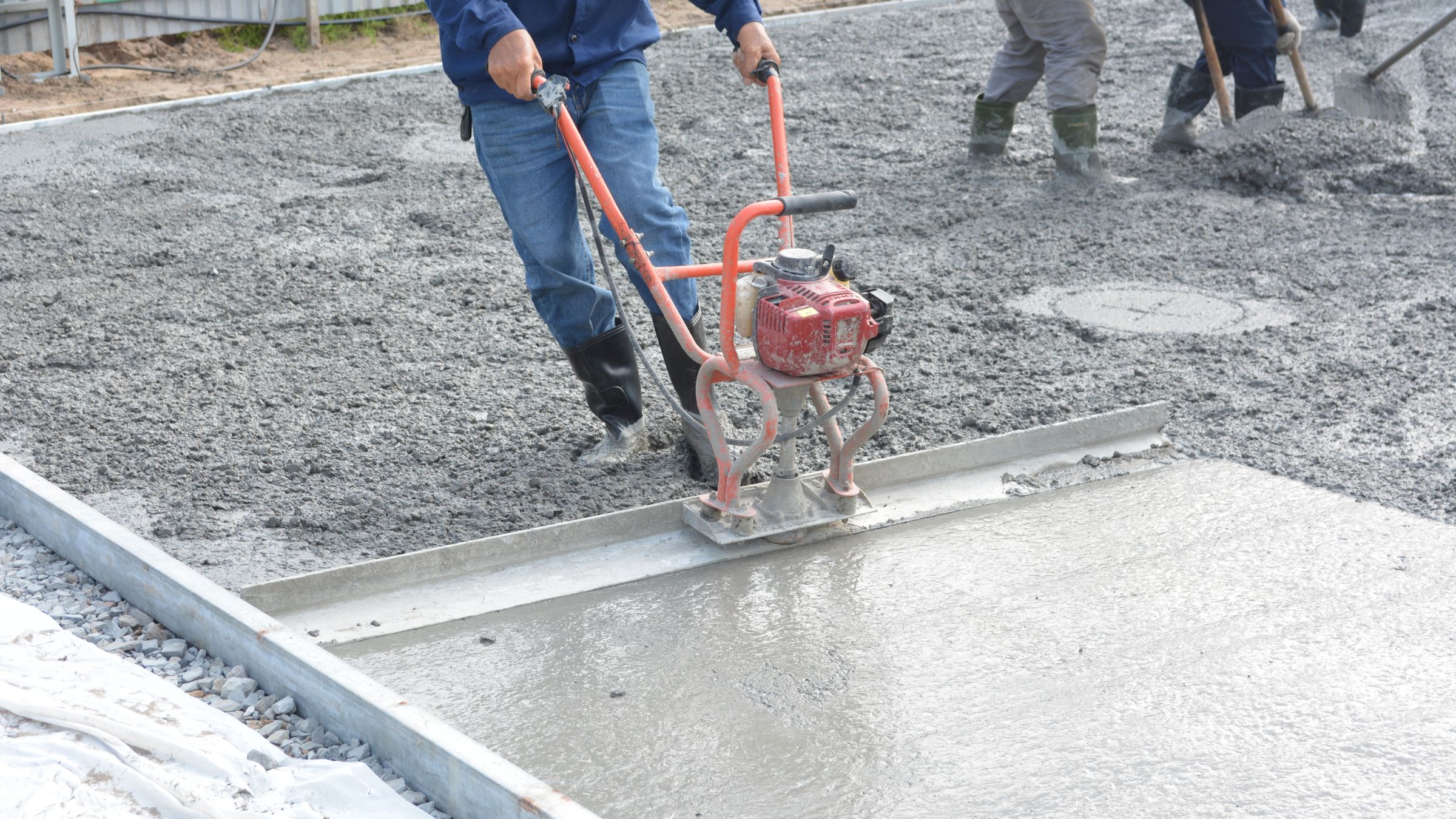
We start with a site assessment to understand ground conditions, drainage, and what the slab needs to support, then excavate and compact a proper base before laying reinforcing mesh or bar suited to the load. The concrete is poured, screeded, and finished to the specification required, whether that's a broom finish for grip or a smoother finish for an internal floor, with control joints placed to manage cracking as the slab cures and settles. We also allow proper curing time before the slab is put into use, since rushing this step is one of the most common causes of early slab failure, undoing otherwise careful preparation work simply because the concrete wasn't given time to reach full strength.
How Long Does a Concrete Slab Last?
A properly poured concrete slab, with the ground preparation, reinforcing, and thickness matched to its intended use, can comfortably last several decades before any major work is needed. What tends to shorten that lifespan isn't age itself but preventable issues from the outset: inadequate base compaction, reinforcing that wasn't sized for the load the slab actually carries, poor drainage that leaves water sitting against or under the slab, or joints that weren't placed to control cracking as the concrete cures and the ground shifts beneath it over time. A slab poured with these details handled properly will generally only need occasional surface maintenance, such as resealing or minor crack repair, rather than any structural work. This is exactly why we treat site assessment and preparation as seriously as the pour itself; it's the difference between a slab that quietly does its job for thirty years and one that starts showing problems within its first few winters.
Built to Last, Designed to Impress
Properly Reinforced Slabs
We size reinforcing mesh and bar to the actual load the slab will carry, not a one-size-fits-all standard.
Level, Durable Pours
Careful screeding and finishing gives you a slab that's level, even, and built to handle daily use without premature wear.
Honest, Upfront Quotes
You'll get a clear price after we've assessed your site, with no surprises added once the job is underway.
Frequently Asked Questions
How Thick Should a Concrete Slab Be?
Slab thickness depends on what it needs to support; a shed or patio slab is typically thinner than a driveway or garage floor designed to carry vehicles. We'll recommend the right thickness and reinforcing once we know what the slab is for.
How Long Does a Concrete Slab Take to Cure?
Concrete slabs are generally ready for foot traffic within a few days, but full curing strength takes closer to four weeks. We'll advise on safe timing for heavier use like parking a vehicle.
Can You Pour a Slab on a Sloped Site?
Yes, sloped sites just need extra groundwork and sometimes additional reinforcing or retaining to create a stable, level base before pouring. We assess this during the initial site visit.
Do I Need a Permit for a New Concrete Slab?
This depends on the size, location, and intended use of the slab. We'll flag anything that may need council sign-off as part of your quote, so there are no surprises.
What's the Difference Between a Slab and a Concrete Driveway?
A driveway is essentially a slab designed and finished specifically for vehicle traffic, with reinforcing and control joints matched to that load, whereas a slab broadly covers any poured concrete base for a shed, patio, foundation, or floor.
Ready To Upgrade Your Property?
Call Wellington’s trusted concrete experts today.